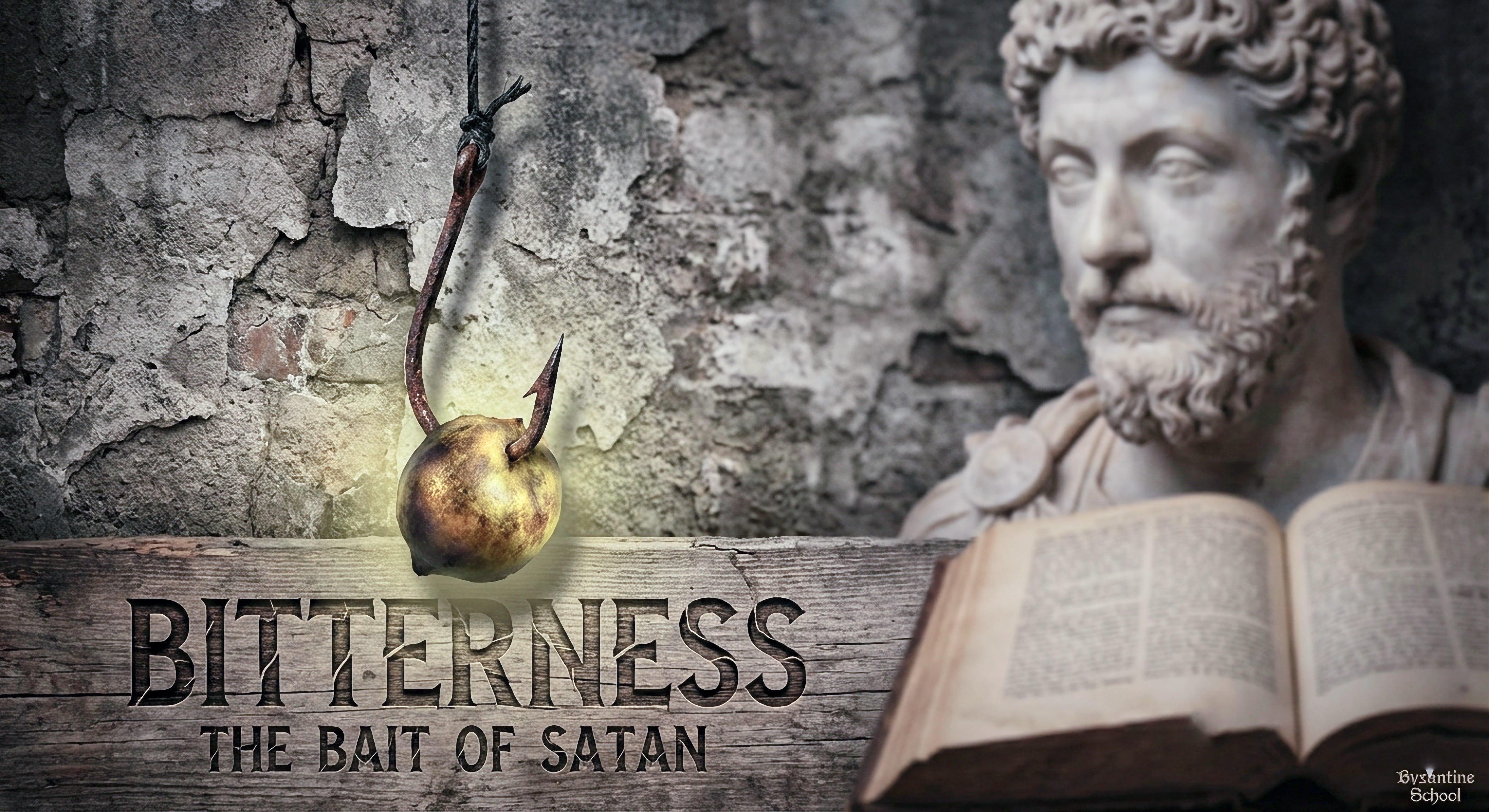
BITTERNESS
To harbor bitterness is to hand the person who wronged you a lease to live rent-free in your mind forever.

Life will eventually break your heart. You will face a devastating betrayal, a public failure, or be cheated out of what you earned. The injustice of it burns.
But when that initial strike happens, a second, more dangerous threat quietly presents itself.
In Christian theology, there is a concept known as the “bait of Satan.” It is the lure of offense. The enemy rarely destroys you by simply handing you a tragedy; he destroys you by handing you a grievance.
Yes, he will offer you the “right” to be offended, to hold a grudge, to demand payback. And the moment you take that bait, the offense ferments in your soul, turning into the deadliest poison of all: bitterness.
The Transformation of the Soul
Bitterness isn’t just a feeling; it is a spiritual rot. It takes a victim of circumstance and systematically rewrites their DNA, turning them into a cynical, angry version of themselves.
The ancient Stoics understood this trap perfectly. They lived through political purges, false imprisonment, and rampant betrayal. None of it was fair. None of it was their fault.
But they realized that while the initial injury was out of their hands, what happened next was entirely up to them.
Marcus Aurelius gave us the ultimate defense against the bait of offense:
“The best revenge is not to be like your enemy.” — Marcus Aurelius
If someone betrays you, and you become treacherous and bitter in return, they have won. They have successfully duplicated their darkness inside of you. You took the bait.
Epictetus took it a step further, reminding us that nursing a grudge is an act of self-enslavement. It hands the person who wronged you the keys to your mind:
“Any person capable of angering you becomes your master; he can anger you only when you permit yourself to be disturbed by him.” — Epictetus
Seneca warned that our obsession with the injury is what ultimately destroys us, not the injury itself:
“Anger, if not restrained, is frequently more hurtful to us than the injury that provokes it.” — Seneca
Don’t Take the Bait
You may be walking through a season of profound unfairness right now. You might be in the middle of a nightmare you did nothing to deserve. The pain is real, and the wound is not your fault.
But what you do with the wound is your choice. You can take the bait. You can dwell on the injustice and let bitterness turn you into something unrecognizable.
Or, you can drop the bait, step out of the bear trap, and bear the injury with quiet dignity.
The nightmare might be mandatory. The bitterness is entirely optional.